Molecular precision · Functional materials · Sustainable futures

NanoBio Materials

forHealthEnergyEnvironment

Dr. Arivazhagan Rajendran, Ph.D.Junior Associate Professor · Integrated Research Center for Carbon Negative Science (ICaNS), Institute of Advanced Energy (IAE), Kyoto University

Bridging nucleic-acids chemistry and DNA nanotechnology with organic, inorganic and hybrid nanomaterials to create functional systems for biomedical science, clean energy and CO₂ reduction.

Dr. Arivazhagan Rajendran
Integrated Research Center for Carbon Negative Science Institute of Advanced Energy, Kyoto University · Uji, Japan
49Publications
3,388Google Scholar citations · 889 since 2021
26 / 33h-index / i10-index
Since 2021: 15 / 21
Integrated Research Center for Carbon Negative Science (ICaNS)Institute of Advanced Energy (IAE), Kyoto University
Research mission

One materials platform. Three global needs.

NanoBio Materials unites the molecular programmability of biology with the optical, electronic and catalytic functions of advanced materials—connecting fundamental chemistry to practical impact.

01 · Health

Precision at the nanoscale

Programmable nucleic-acid structures and biofunctional nanomaterials for understanding, sensing and influencing biological systems.

  • DNA origami and nano-bio interfaces
  • Biomolecular stability and recognition
  • Biofunctional nanoparticles
02 · Energy

Materials for conversion

Organic, inorganic and hybrid nanomaterials engineered to harvest, store and transform energy more efficiently.

  • Photocatalysis and electrocatalysis
  • Low-dimensional catalytic materials
  • Solar-driven chemical conversion
03 · Environment

Chemistry for a lower-carbon future

Functional materials and sustainable processes that turn environmental challenges into opportunities for resource recovery.

  • CO₂ reduction and utilization
  • Carbon-negative science
  • Green synthesis and catalysis
Research foundations

From molecular information to material function.

The research programme grows from a long-standing foundation in nucleic-acids chemistry and DNA nanotechnology into a broader platform of organic, inorganic and hybrid nanomaterials for health, energy and environmental applications.

Nucleic-acids chemistry
DNA nanotechnology
NanoBio interfaces
Functional nanomaterials
01

Nucleic-acids chemistry

Recognition, folding and function of non-canonical DNA structures, DNA–protein complexes and small-molecule interactions.

G-quadruplexi-MotifMolecular recognition
02

DNA nanotechnology & origami

Programmable assembly, ligation and stabilization of 2D and 3D DNA origami, including addressable scaffolds for nano-bio applications.

Self-assemblyLigationHigh-speed AFM
03

Organic nanomaterials

Molecularly designed soft and carbon-based nanomaterials for light harvesting, molecular recognition and bio-related function.

Organic nanoassembliesPhotochemistryBiointerfaces
04

Inorganic & hybrid nanomaterials

Nanoparticles, heterostructures and low-dimensional catalysts designed for energy conversion, CO₂ reduction and carbon-negative science.

NanohybridsElectrocatalysisCO₂ reduction
Current directionOrganic and inorganic nanomaterials · light-assisted CO₂ reduction · low-dimensional catalytic systems

International research network

View the complete research profile →
Research support

Selected funding.

Competitive and institutional support for DNA nanotechnology, nucleic-acids chemistry and functional nanomaterials.

2016–2018 · Principal Investigator

Grant-in-Aid for Young Scientists (B)

DNA-origami platform for screening anticancer drugs that target topoisomerases.

KAKENHI 16K17934 ↗
2015–2018 · Co-Investigator

Grant-in-Aid for Scientific Research (A)

Chemical tools for precise detection of modification and damage in the human genome.

KAKENHI 15H02189 ↗
2012–2017 · Co-Investigator

Grant-in-Aid for Scientific Research (S)

Control and elucidation of gene expression at the molecular level.

KAKENHI 24225005 ↗
View the complete funding list →
Selected work

Publications

Recent and representative contributions spanning nucleic-acids chemistry, DNA nanotechnology, NanoBio interfaces and functional materials for energy and the environment.

2026

High-energy Ni²⁺/Bi³⁺ layered double hydroxide/MXene heterostructure electrode using a supercritical fluid approach

ACS Applied Nano Materials · Vol. 9, 11031–11044

2026

Green-fabricated zinc sulfide nanoparticles with dual antidiabetic and anticancer efficacy

Applied Materials Today · Vol. 49, 103152

2024

Near quantitative ligation results in resistance of DNA origami against nuclease and cell lysate

Small Methods · Vol. 8, 2300999

2022

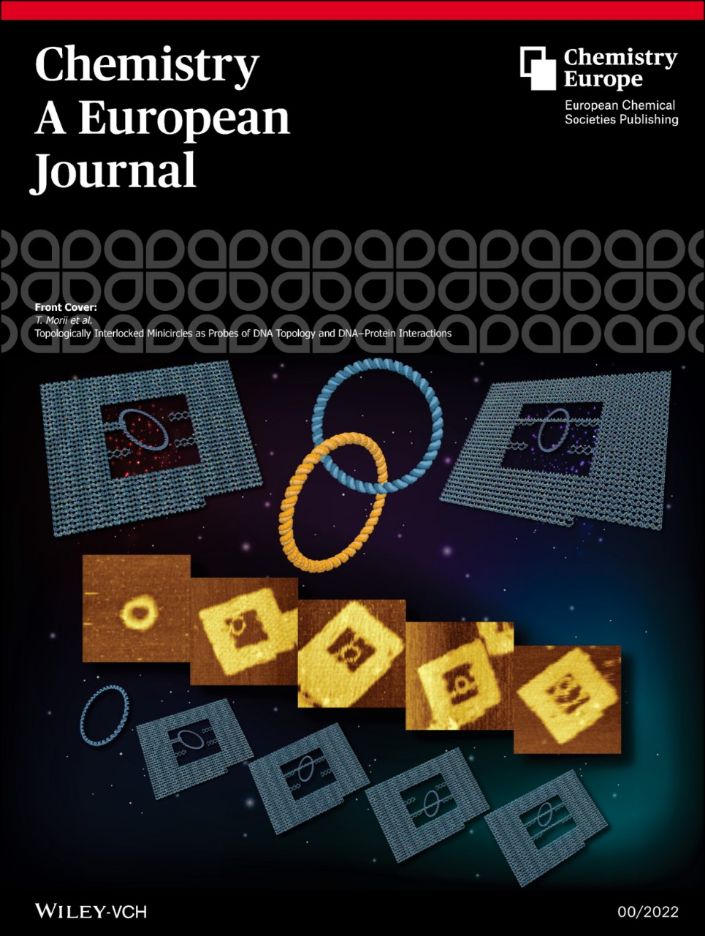
Topologically-interlocked minicircles as probes of DNA topology and DNA–protein interactions

Chemistry – A European Journal

2021

Stabilization and structural changes of 2D DNA origami by enzymatic ligation

Nucleic Acids Research · Vol. 49, 7884–7900

2011

Programmed two-dimensional self-assembly of multiple DNA origami jigsaw pieces

ACS Nano · Vol. 5, 665–671 · Journal front cover

View the complete list of 49 publications →
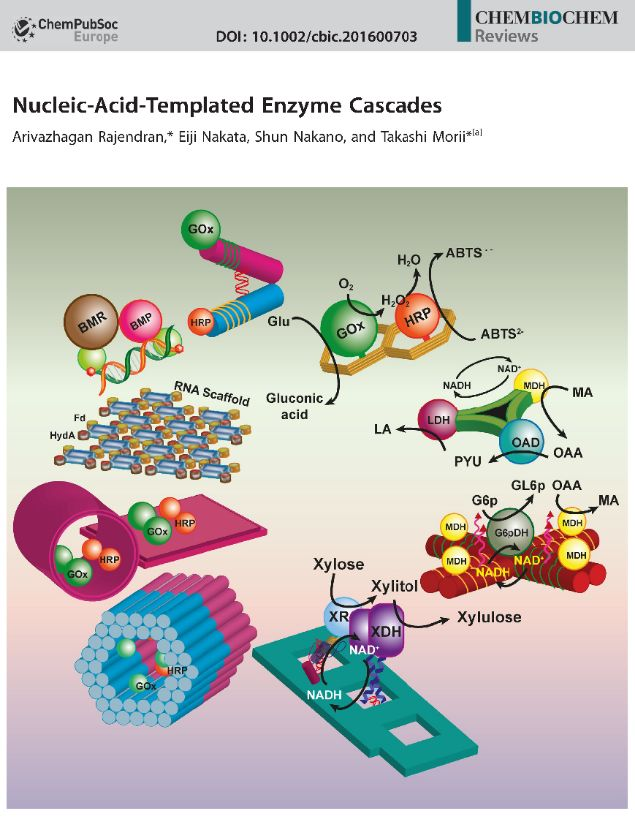
ChemBioChem highlight for the review Nucleic-Acid-Templated Enzyme Cascades Chemistry – A European Journal 2022 cover featuring topologically interlocked DNA
Highlights

Research recognized across journals, media and scientific communities.

Work on DNA origami, nucleic-acid structure and nano-bio systems has appeared on journal covers and in international science reporting.

View all covers, highlights and awards →
Updates

Recent news

Recent research, collaboration and academic milestones. The complete chronological archive is available below.

  1. Research article accepted in ACS Applied Nano Materials.

  2. Research article accepted in Applied Materials Today.

  3. Hosted three visiting students from POSTECH, South Korea, for research discussion.

  4. Research article accepted in Journal of Molecular Structure.

  5. Received two internal research grants from the Institute of Advanced Energy, Kyoto University for CO₂-conversion nanomaterials.

  6. Two internship students from Visvesvaraya Technological University joined the group.

  7. Received a research grant from the Hirose Foundation.

View the complete news list →
Academic path

Education and academic appointments.

A single chronological record of academic qualifications and professional appointments.

Complete academic path

  1. February 2015–presentJunior Associate Professor, Integrated Research Center for Carbon Negative Science (ICaNS), Institute of Advanced Energy (IAE), Kyoto University, Japan
  2. September 2013–January 2015Assistant Professor, Life Science Center of TARA, University of Tsukuba, Japan
  3. January 2010–August 2013CREST and JSPS Postdoctoral Researcher, Department of Chemistry, Kyoto University, Japan
  4. October 2008–December 2009Postdoctoral Researcher, FIBER, Konan University, Japan
  5. October 2005–September 2008Ph.D. in Chemistry (Analytical Chemistry), Tohoku University, Japan
  6. January–September 2005Research student, CSIR–Central Leather Research Institute, India
  7. September–December 2004Research student, Max Planck Institute for Bioinorganic Chemistry, Germany
  8. October 2003–August 2004Research student, Tohoku University, Japan
  9. July 2001–June 2003M.Sc. in Inorganic Chemistry, University of Madras, India
  10. July 1998–June 2001B.Sc. in Chemistry, Government Arts College, Krishnagiri, affiliated with Periyar University, India

Research mentoring

Core members and alumni, international research visitors, and students under co-guidance in the Graduate School of Energy Science (K-11).

Members & mentoring →

Scientific service

Institute committee work, journal peer review and membership of professional chemistry and nucleic-acid societies.

Complete service record →

Public outreach

Science classes, laboratory visits, conference organization, invited educational programmes and open teaching resources.

Complete outreach record →
View the complete academic path →
Teaching

Chemistry for energy and society.

Courses connect fundamental physical chemistry with contemporary questions in sustainable energy and carbon management.

Graduate

Graduate School of Energy Science

Teaching record, 2022–present · English

  • From Carbon Neutral to Carbon Negative (2022–present)
  • Fundamental Energy Science (2024–present)
  • International Seminar on Energy Science (Group Study) (2025–present)
Undergraduate

Institute for Liberal Arts and Sciences

Annual teaching record, 2015–present · English

  • Essentials of Basic Physical Chemistry
  • Basic Physical Chemistry: Thermodynamics
  • Basic Physical Chemistry: Quantum Theory
  • Chemistry of Sustainable Energy
View the complete teaching record →
Contact & opportunities

Let’s build the next NanoBio material.

Research discussions and collaboration enquiries in nucleic-acids chemistry, DNA nanotechnology, organic and inorganic nanomaterials, energy conversion and CO₂ reduction are welcome.

Prospective researchers: Ph.D. and postdoctoral enquiries are welcome, particularly from candidates applying for external scholarships. Please review the relevant funding guidelines and include a focused research idea when contacting.
Affiliation

Integrated Research Center for Carbon Negative Science (ICaNS)Institute of Advanced Energy (IAE)Kyoto University

Address

M-576E, Main Building, Gokasho, Uji, Kyoto 611-0011, Japan